The 6th International Conference
on Electrical Engineering and Control Applications
ICEECA 2024
==============================
==================Plenary session N° 1================
==============================
Professor Mohamed Benbouzid, IEEE Fellow
University of Brest, France
UMR CNRS 6027 IRDL – Institut de Recherche Dupuy de Lôme, Brest, France
Mohamed.Benbouzid@univ-brest.fr
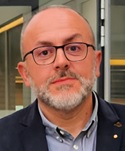
Professor Mohamed Benbouzid is a Full Professor in electrical engineering. Prof. Benbouzid primary research interests and expertise include control of electric machines, variable-speed drives for traction, propulsion, and renewable energy applications, and fault diagnosis of electric machines
Prof. Benbouzid is an IEEE Fellow and a Fellow of the IET. He is the Editor-in-Chief of the International Journal on Energy Conversion and the Applied Sciences (MDPI) Section on Electrical, Electronics and Communications Engineering. He is a Subject Editor for the IET Renewable Power Generation.
Title:
Prognostics and health management: Beyond deep learning with recurrent expansion
Abstract
Machine learning applications for prognosis and health management usually face data unavailability, complexity, and drift due to the massive and rapid evolution of data volume, velocity, and variety (3V). Advances in deep learning have brought many improvements in this area, providing generative modelling, nonlinear abstractions, and adaptive learning to meet these challenges. Deep learning aims to learn from representations that provide a coherent abstraction of the original feature space, enabling it to be more meaningful and less complex. However, the data complexity associated with various distortions, such as higher noise levels, remains challenging to overcome. In this context, recurrent expansion algorithms have recently been introduced to explore deeper representations than ordinary deep networks, enabling even better feature mapping. In contrast to traditional deep learning, where abstracting inputs extract meaningful representations, recurrent expansion merges entire deep networks into one, allowing inputs, maps, and estimated targets to be explored as primary sources of learning. These three sources of information provide additional knowledge about their interactions in a deep network. Furthermore, recurrent expansion provides the ability to investigate the estimated targets of multiple networks and learn significant features, improving its accuracy with each round.
This keynote will provide a general overview of recurrent expansion, its main learning rules, variants, and prospective developments in this context. Case studies on electromechanical systems will be provided to illustrate the effectiveness of recurrent expansion prognosis.
==============================
=================Plenary session N° 2=================
==============================
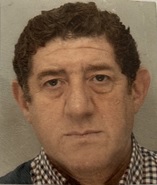
Professor Abdenour Lounis
CNRS-Grenoble, France
Professor Abdenour Lounis, Doctor in Nuclear Physics, from CNRS-Grenoble, France and PhD in High energy Physics from University of Montreal, Canada. He is a senior researcher in Laboratoire de Physique des 2 Infinis, Irène Joliot Curie Laboratory (IJC Lab) at Orsay and Professor of Université Paris-Saclay, France. He has contributed during more than 30 years to different research projects mainly those based at CERN Geneva and FERMILAB Chicago, USA. As Pixel project leader at IJC Lab, he has launched a new research activity axis, on innovative high resolution pixel detectors and submicron electronics for ATLAS-CERN experiment. Regarding academic activity, He contributed as responsible of Master 1 Nuclear Energy to nuclear experimental physics teaching duties and internship organization and placement of worldwide students in different research centers (CNRS-CEA-Nuclear Industries, CERN). Abdenour Lounis has cumulated more than 500 publications in Nuclear Instrumentation and has directed successfully several doctorate PhD thesis of Université Paris Saclay.
Title:
Recent advanced technologies in radiation sensors used for nuclear experimental projects and spin-off applications.
Abstract :
Semiconductors sensors are preferred in most of nuclear applications for their superiority in position and timing resolution.
Moreover important progress have been made recently to improve for their radiation tolerance, especially when they are associated with rad-hard readout Asics electronics. In this seminar, after a brief review of the status of the art of radiation sensors, technical arguments will be detailed to highlight their performance in the context of most important international scientific projects and spin-off applications.
==============================
==================Plenary session N° 3================
==============================
Professor Tarek Ahmed-Ali
University of Caen Normandy, France
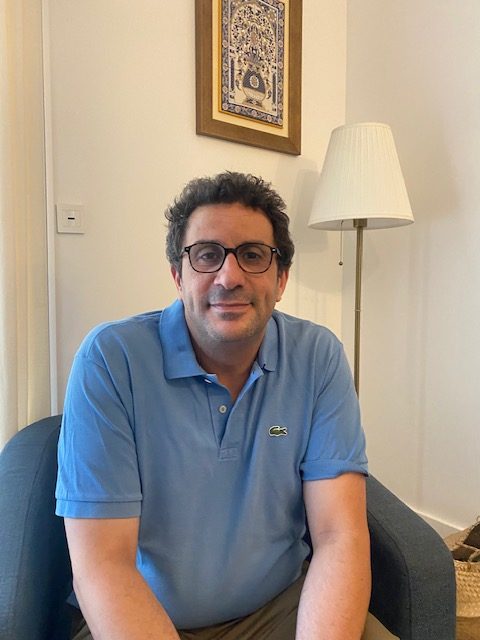
Professor Tarek Ahmed-Ali was born in Algiers, Algeria, in 1972. He received the B.Sc. degree in electrical engineering from the Ecole Nationale Polytechnique of Algiers, Algiers, in 1994, the M.Sc. degree in electrical and computer engineering from the University of Paris VI, Paris, France, in 1995, and the Ph.D. degree in electrical and computer engineering from the University of Paris Sud, Paris, in 1998.,In 1998, he joined the University of Paris XIII, Paris, as a Teaching and Research Assistant. In 1998, he was also with the Ecole Centrale de Lille, Lille, France, as a Teaching and Research Assistant. In 2000, he joined Société Nationale des Chemins de fer français (the French National Railway Corporation) as a Research and Development Engineer. In 2002, he became a Lecturer in control engineering at Ecole Nationale des Ingénieurs des Etudes et Techniques de l’Armement, Brest, France. In 2008, he joined as an Associate Professor at the University of Caen, Caen, France, where he became a Professor of automatic control in 2010. His main research interests include sliding mode control, nonlinear observers, and fault-tolerant control and diagnosis in the field of ac drives
Title :
Adaptive observers from finite to infinite dimensional systems
Abstract:
This talk is devoted to adaptive observers for some classes of distributed parameters systems. We will show that several existing results for finite dimensional systems can be extended to infinite dimensional systems More precisely, new finite-dimensional adaptive observers are proposed for uncertain heat equation and a class of linear Kuramoto-Sivashinsky equation (KSE) with local output. The observers are based on the modal decomposition approach and use a classical persistent excitation condition to ensure prac tical exponential convergence of both states and parameters estimation. An important challenge of this work is that it treats the case when the function φ1(·,t) of the unknown part in the PDE model, depends on the spatial variable and φ1(·,t) ∈ L2(0,1).
==============================
==================Plenary session N° 4================
==============================
Professor Massimo Morichi
Universities of Aix-Marseille (France) and Camerino (Italy)
Former: EVP Director Global R&D and Innovation of AREVA Group (France), VP R&D CTO CANBERRA Industries Inc. (BU of AREVA Group) (US), Group Leader of AREVA project for Site Remediation Fukushima Project (Japan), Head of the AREVA Fellows and of the Intellectual Property Committee, Actual: VP CAEN, Director Nuclear Instrumentation & Systems; Senior Scientist Nuclear Measurements & Methods at CAEN Technologies Inc. Professor at Universities of Aix-Marseille (France) and Camerino (Italy) on Nuclear Measurements, Methods and Applications and University of Pisa DICI Department Upon finishing his technical studies at E. Fermi Institute of Rome in “Nuclear Engineering”, he specialized in Reactor Core Physics simulation & modelling participating to ENEA-PEC nuclear reactor studies on reactivity transient analysis. Doctor in Nuclear Physics at University “La Sapienza” of Rome (Italy) and is a Certified Radiation Protection Expert (level II).
Pr. Massimo Morichi …..
He starts his activity with the Italian National Institute of Nuclear Physics-INFN and the Ministry of Interior for the Chernobyl emergency, while he was Teacher at the Atomic Defence Laboratory on Gamma-Spectrometry and Nuclear Emergency Measurements. He worked on the development of the first nuclear measurement business unit of COGEMA (Eurisys Measures) and participate to realize all major nuclear measurement systems installed for the French Nuclear Fuel Facilities (Marcoule, La Hague, Pierlatte etc.); he executed the integration of many Companies leaders in nuclear measurements technologies up to the acquisition of Canberra Industries Inc. in 2000 when COGEMA became AREVA. Appointed CTO-VP R&D launched and coordinating the development of many innovative nuclear measurement solutions for IAEA, DOE, DNDO, CEA till 2012 (Fresh and Spent Nuclear Fuel characterization, Active and passive neutron interrogation systems, photofission with Linac, International Safeguards measuring systems as well as the entire new design of Radiation Monitoring System applied to VVR, EPR and AP1000 reactors. In 2011, a week after the Fukushima accident, was appointed Group Leader of the AREVA Fukushima Project in charge of the site remediation plan in Japan in support to TEPCO in the frame of the crisis support collaboration established at government level between France and Japan. In 2012 was promoted SVP-Director of R&D Innovation of the AREVA-Group, where he contributes to establish the Nuclear Light Water Reactor Institute in collaboration with EDF and CEA developing the AREVA set of Technology Roadmaps and many new projects for waste non-destructive measurements, active and passive safety systems for EPR reactor, including In-core measurements and monitoring of reactivity at reactor start-up. He has developed with his teams many technological solutions today in use by the international nuclear safeguards and non-proliferation and realized many systems utilized by the IAEA Inspectors. He is today also Director of the international EU MICADO Project for the realization of the most innovative and expert nuclear waste characterization and digitization system that could represent the EU reference standard. He’s actively studying on nuclear transmutation for the development of a novel ADS Nuclear System and is member of the Scientific Board and Advisor to the original CERN team that design the first Energy Amplifier ADS reactor (lead by Prof. Carlo Rubbia nobel prize). He’s actively involved in the technology identification and establishing the international collaborations. He was visiting member of the Scientific Committee of IRSN (Institute for Nuclear Radiation Safety) and has been Board member of the Nuclear Experimental Reactor J. Horowitz (CEA Cadarache). Panellist, chairman and invited speaker at IAEA Safeguard Conference, STS-Kyoto Forum on “Nuclear Technology Trends and Future Prospective”, ANIMMA Conference, IEEE-NSS. Delegate to IAEA General Conference 2022.
Title :
Novel Nuclear Measurements techniques for SNM identification and analysis in the field of Fundamental Research, Nuclear Security & Safeguards